Add a header to begin generating the table of contents
Goal
Design a five-room jumping puzzle developed across 4 stages: paper prototype, blockout, iteration, and final level.
Maintain clean documentation at each stage to clearly track design decisions, changes, and outcomes.
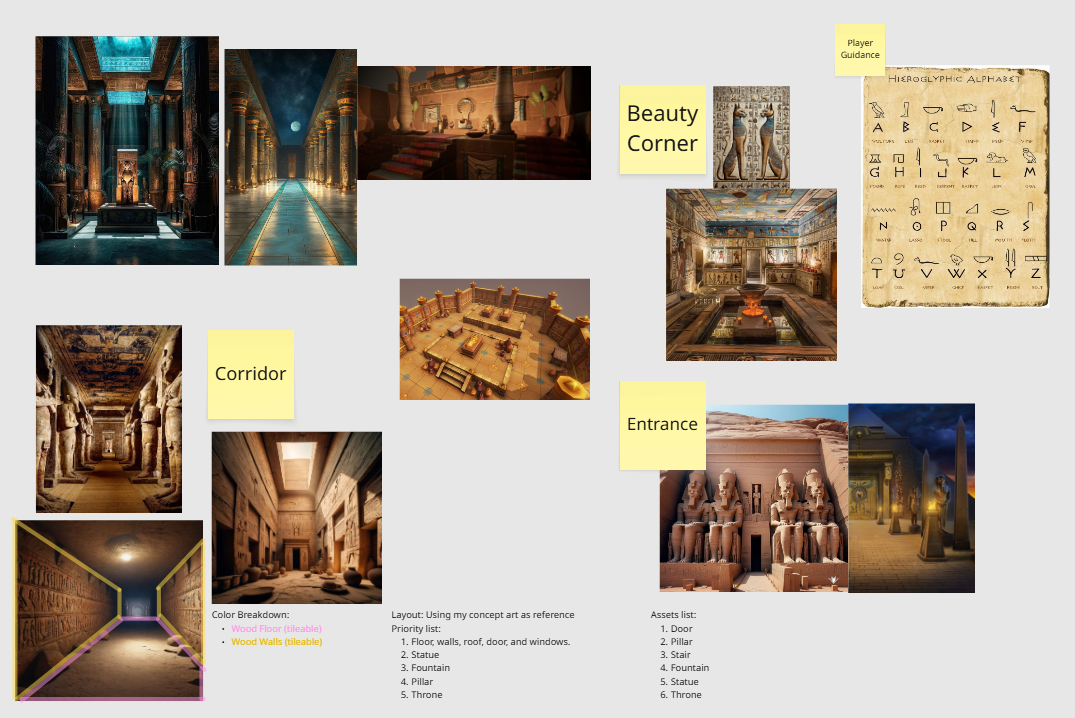
Use research and references from Egyptian architecture and horror adventure games to inform layout, traps, and mood.
Apply multiple iterations to refine jump distances, player timing, and trap placement for clarity and fairness.
Introduce visible traps before hidden traps to teach risk, then increase tension without relying on surprise deaths.
Ensure each of the 5 rooms focuses on one primary challenge to create a clear learning curve.
Reinforce the Egyptian horror theme set in Cleopatra’s era through environmental storytelling and spatial cues.
Overview
Game Design Documents
GDD and References
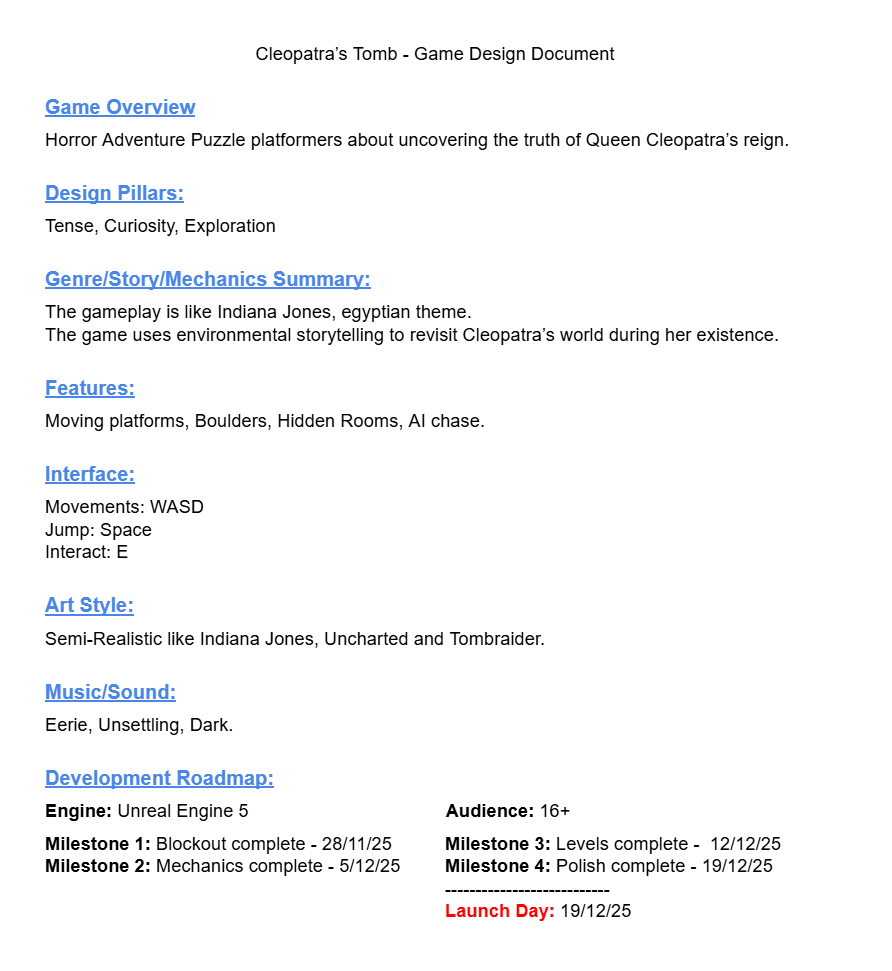
Game Design Summary
Scope Control: Used a one-page game design document to keep the project clean, readable, and easy to manage.
Reference Analysis: Analyzed reference games with a focus on level flow, movement learning, and trap readability.
Tension Design: Designed tension through level layout and pacing rather than complex mechanics.
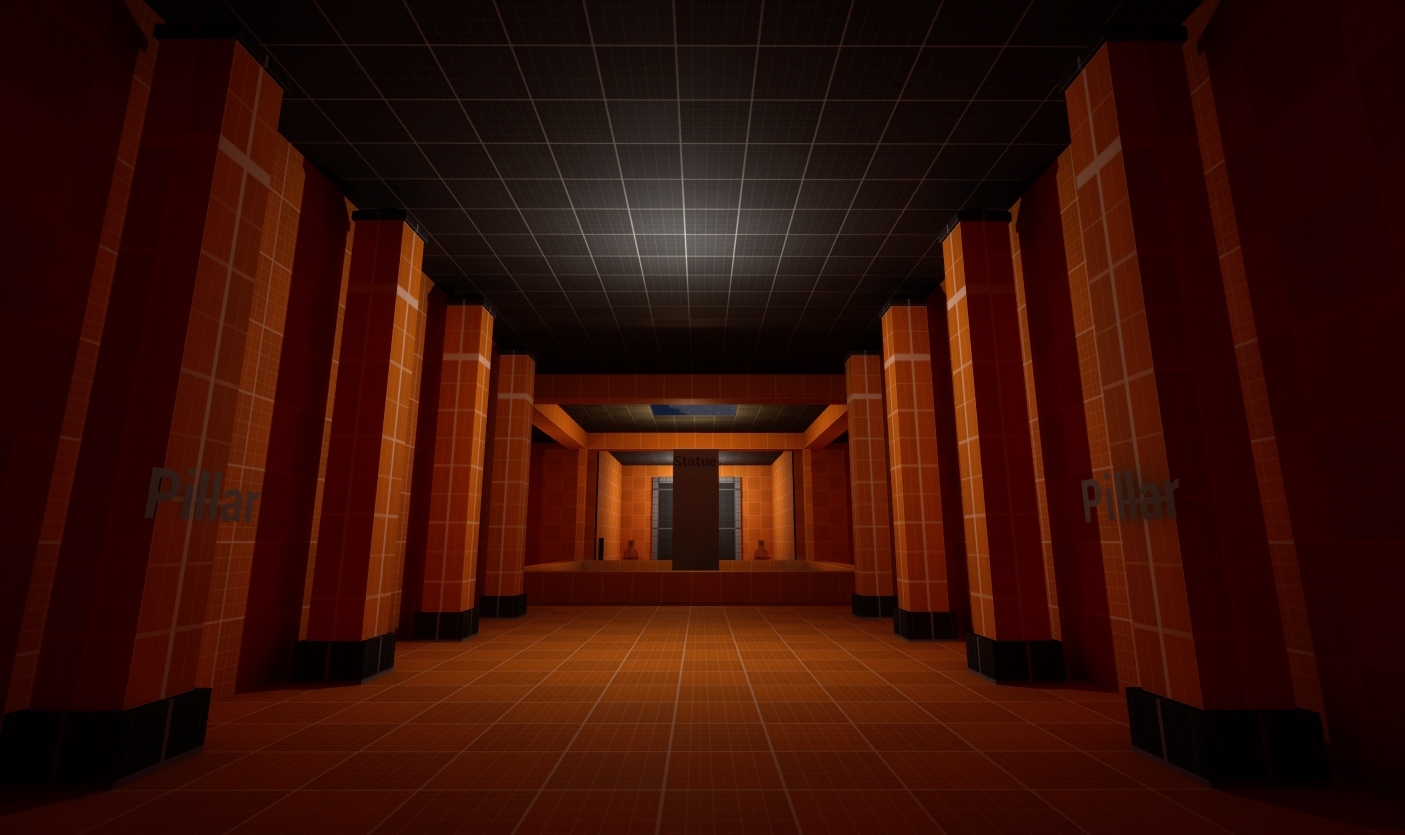
Architectural Reference: Used Egyptian architecture as reference for room scale, corridors, and vertical structure.
Player Guidance: Applied architectural cues to naturally guide player navigation and trap placement.
Atmosphere Study: Studied adventure games such as Indiana Jones and historical media for atmosphere and pacing.
Environmental Storytelling: Relied on environmental storytelling to build tension without scripted scares.
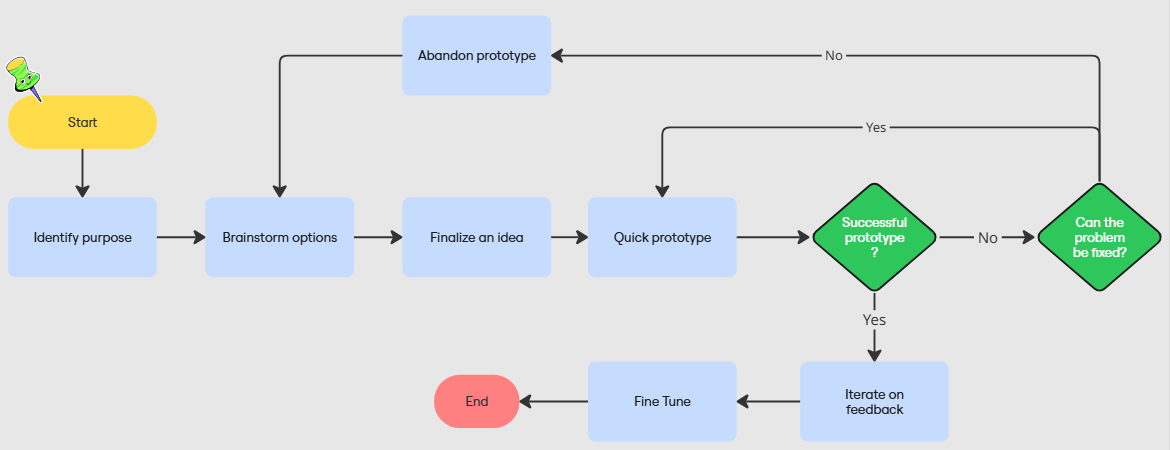
Design Process
Ideation to production
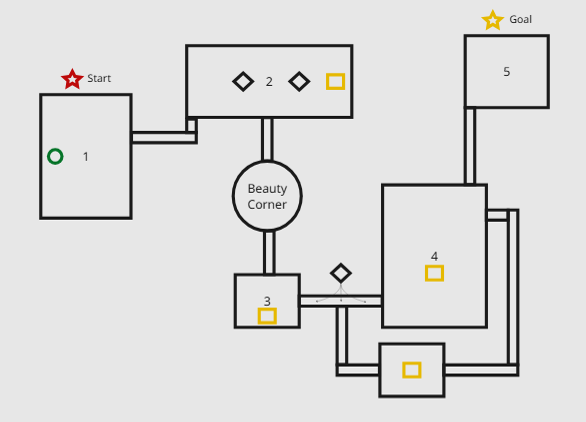
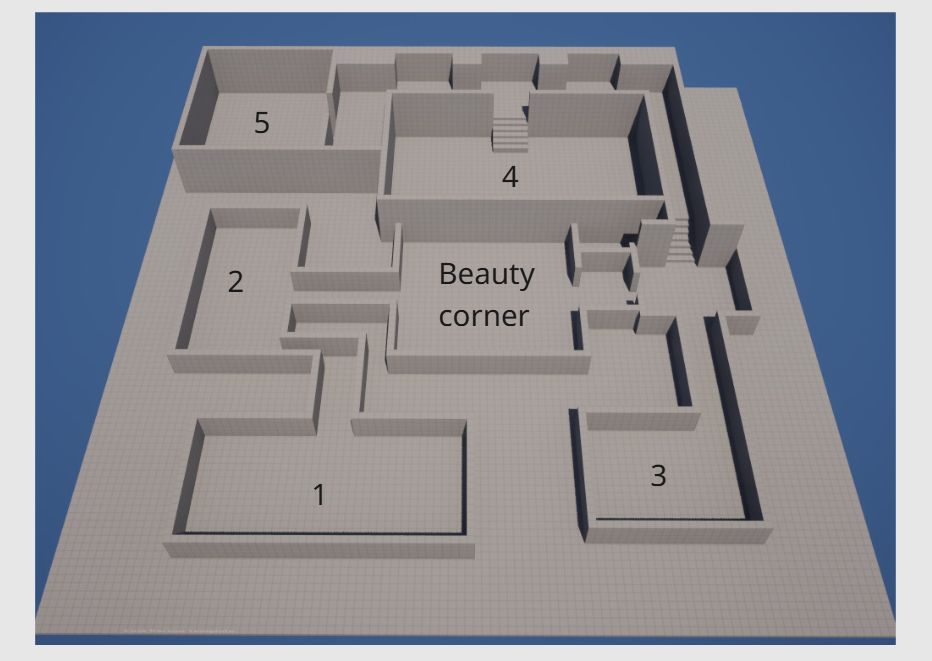
Paper Prototype
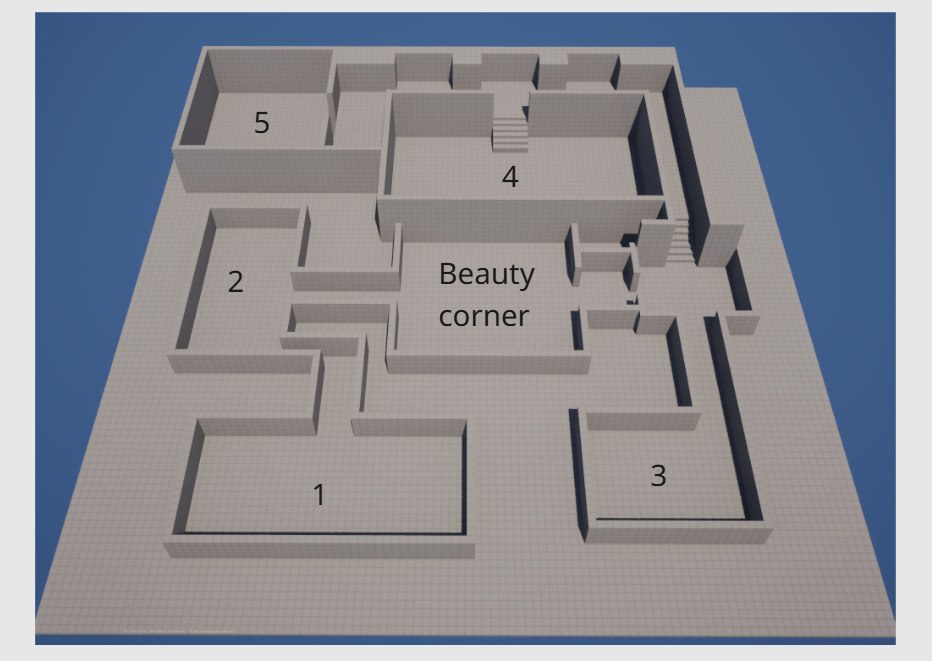
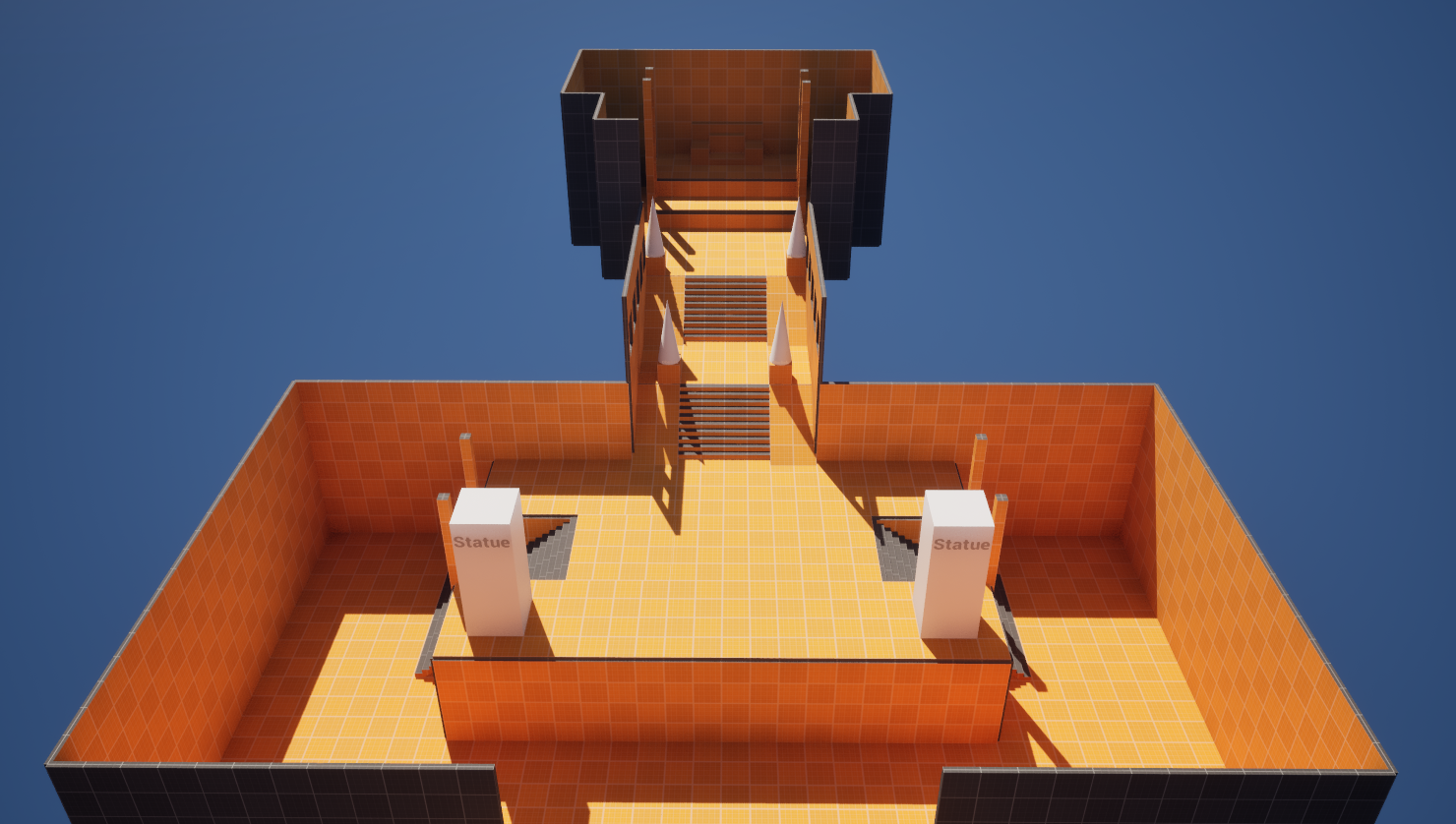
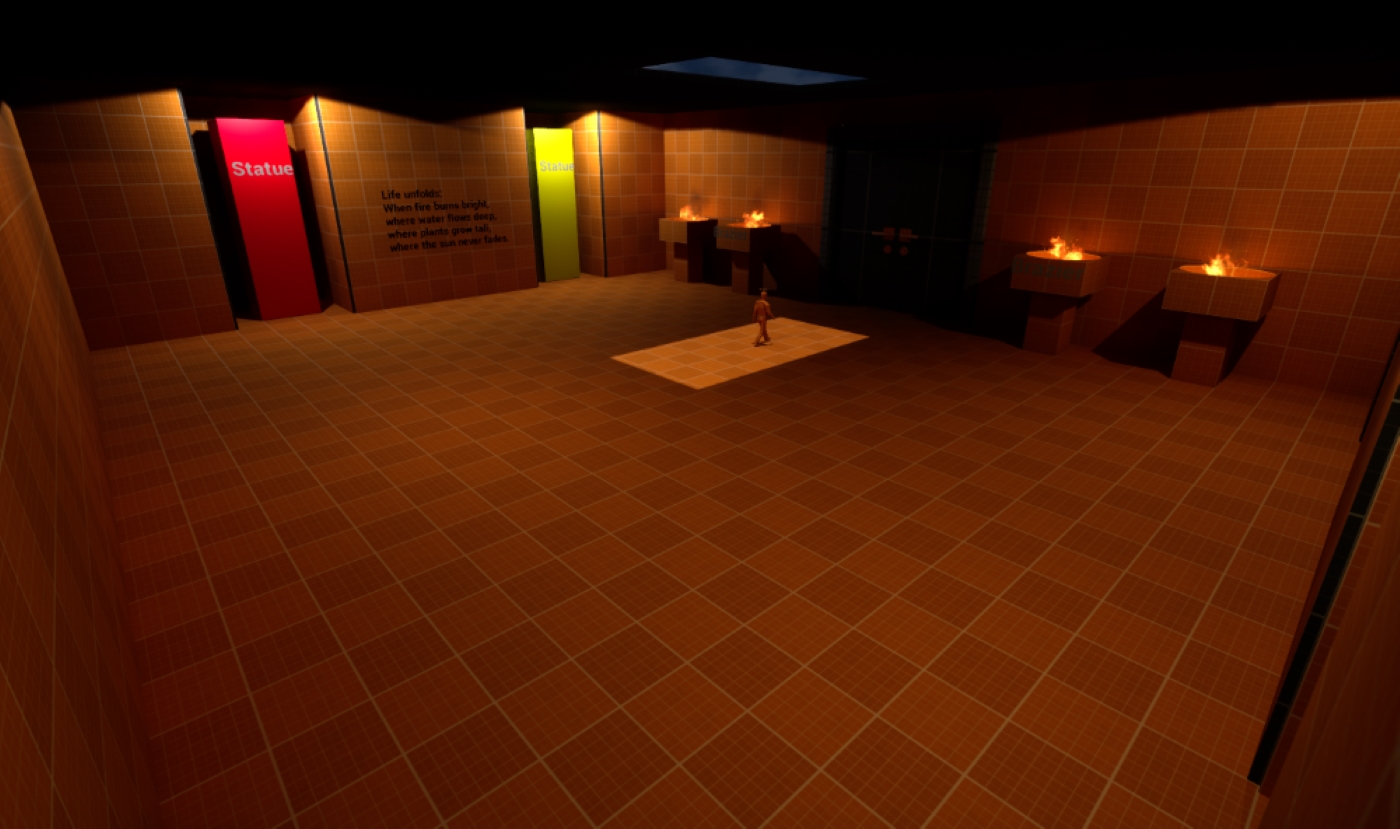
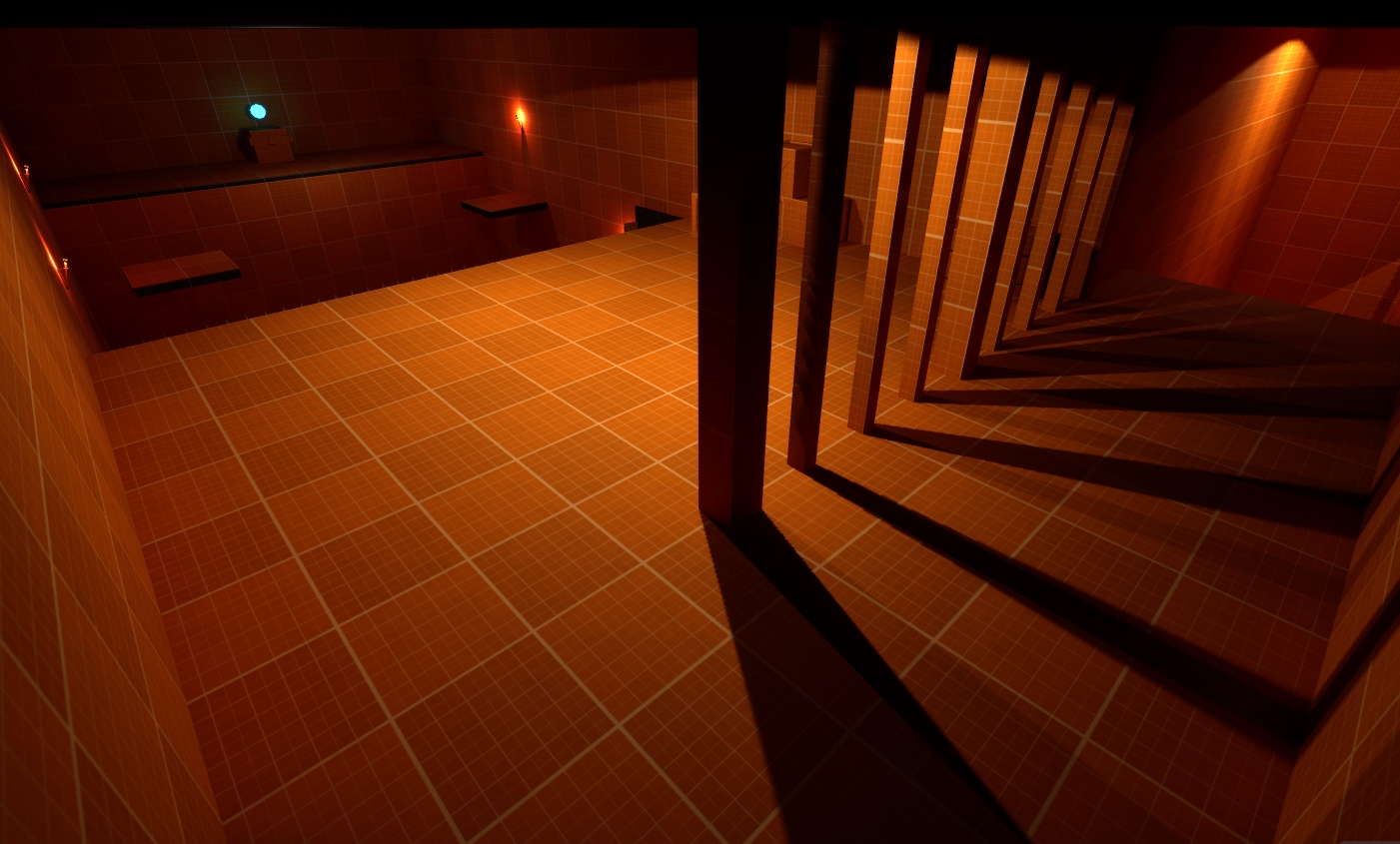
Blockout
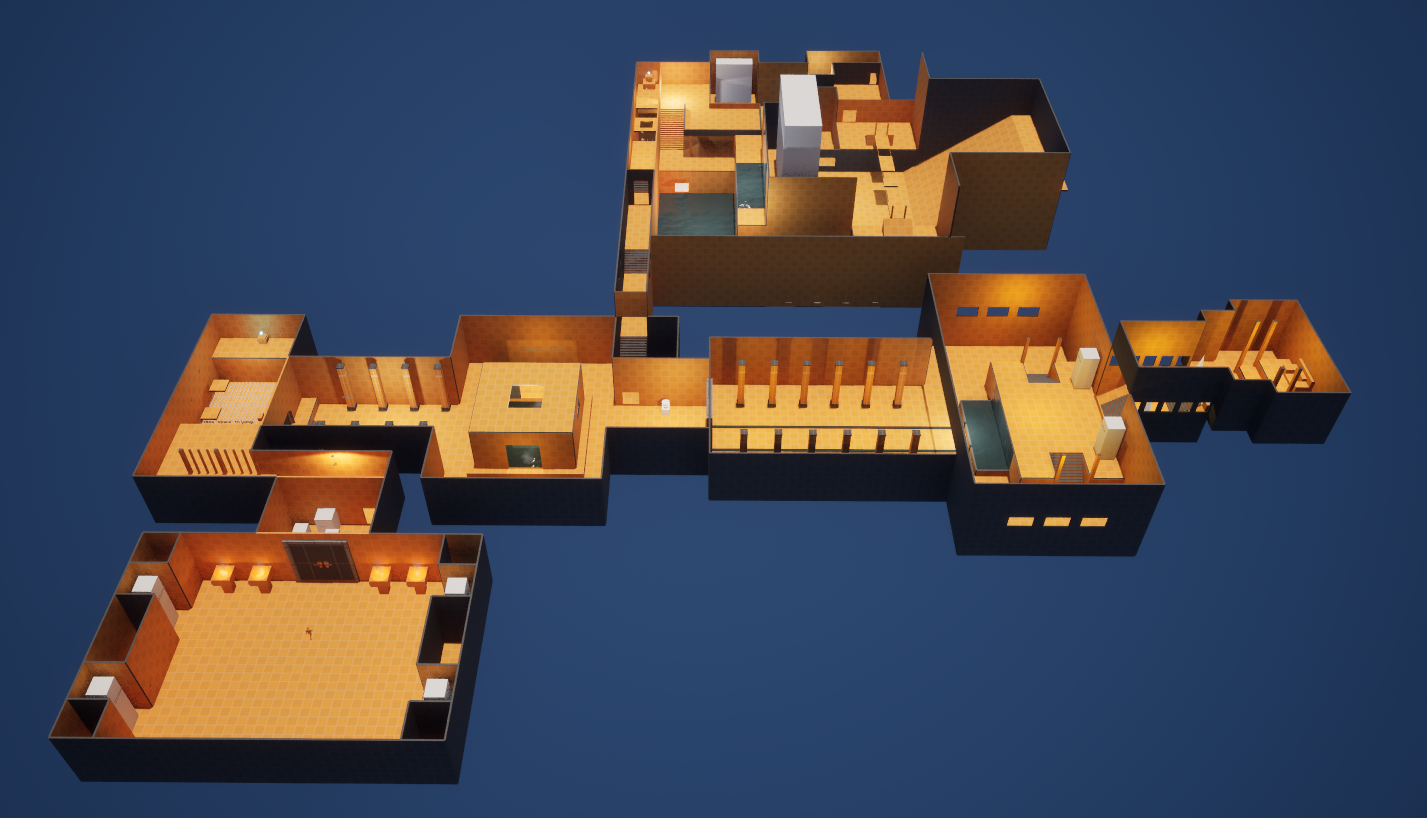
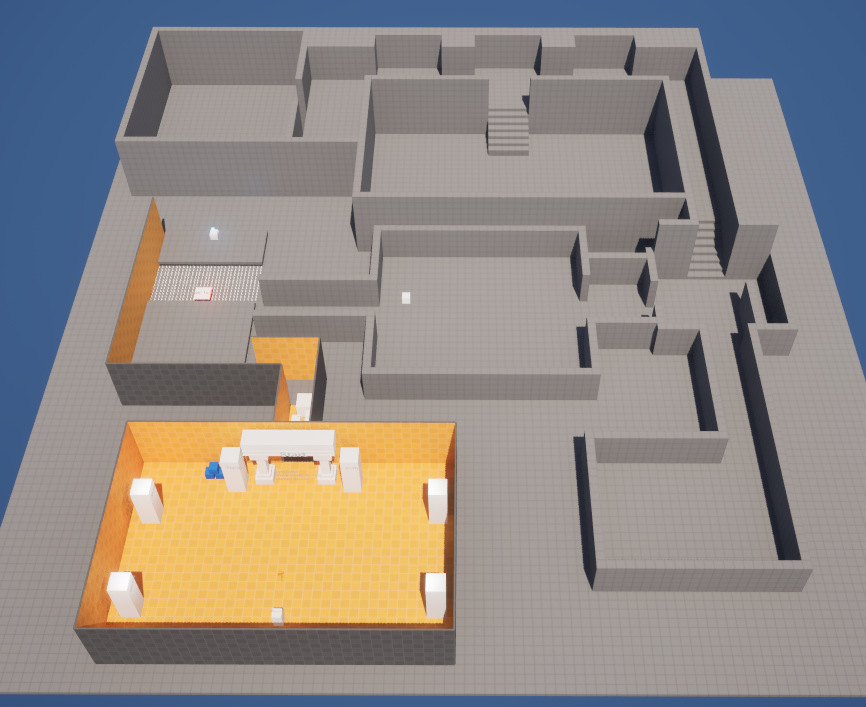
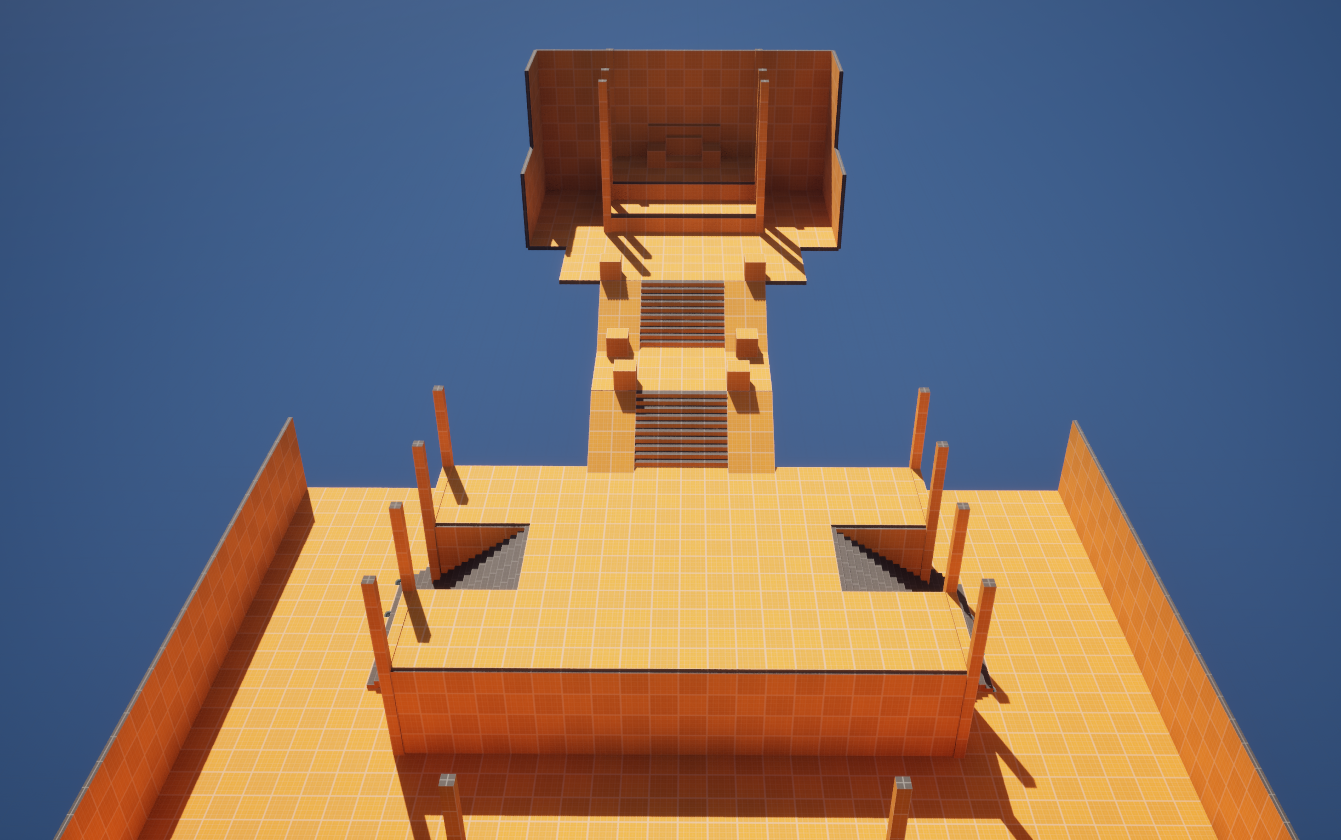
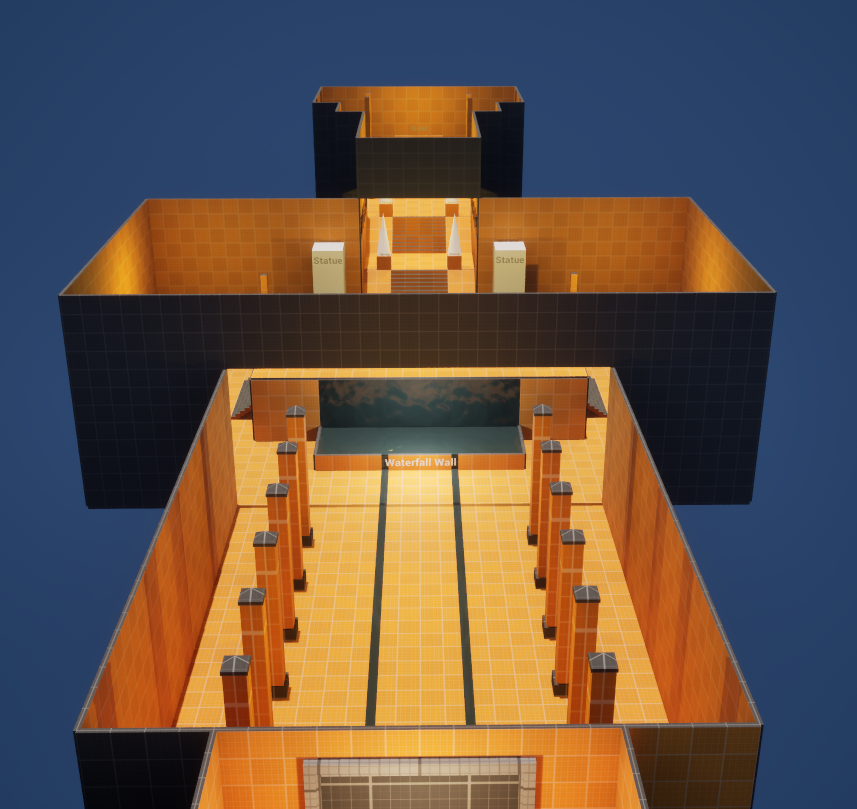
Iterated Blockout
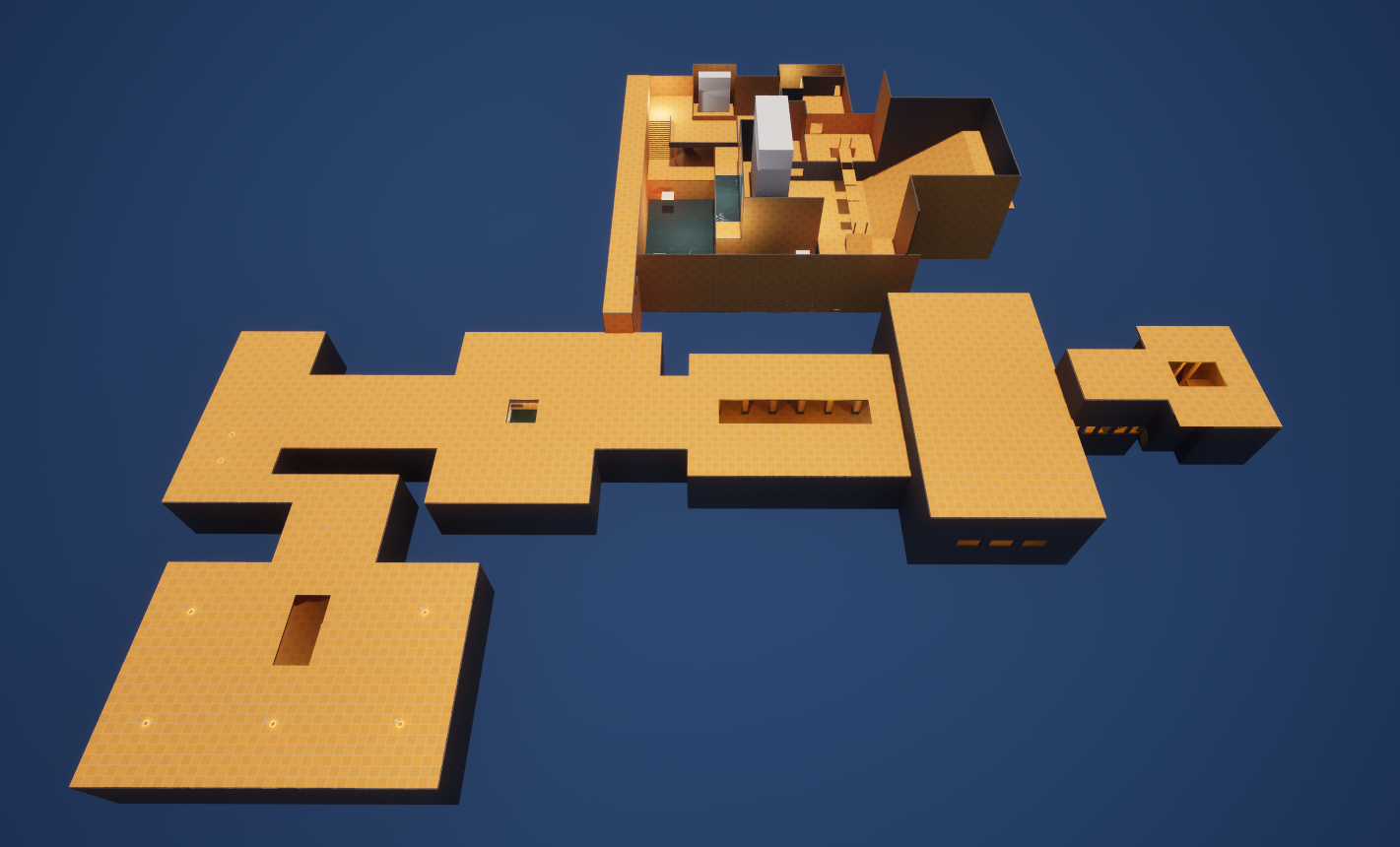
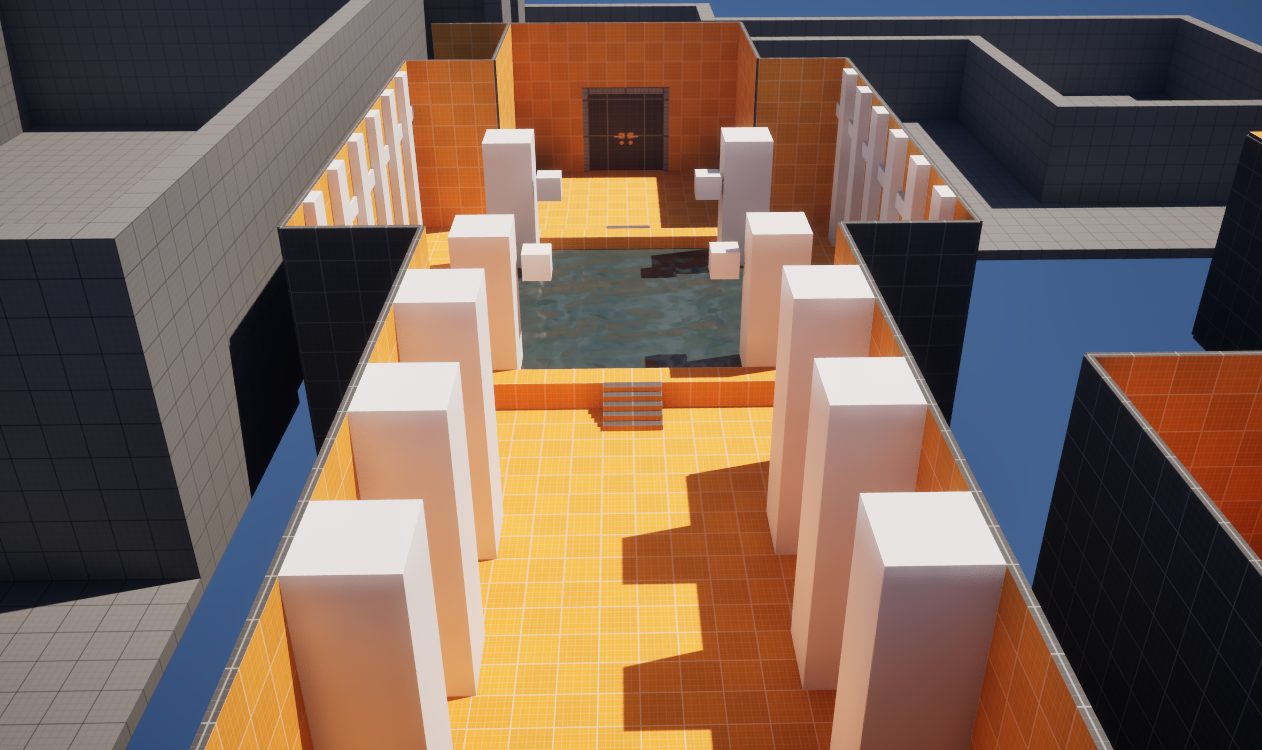
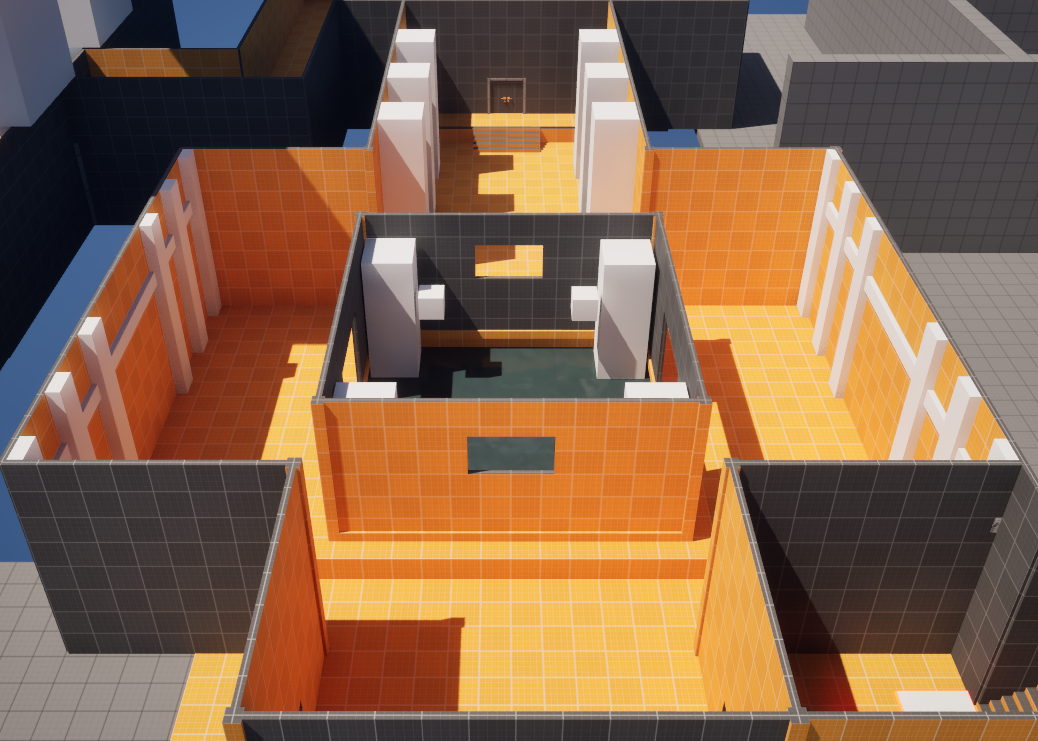
Polished Blockout
Design Process
Ideation: Defined the core goal, five-room structure, and horror platforming focus within a strict scope.
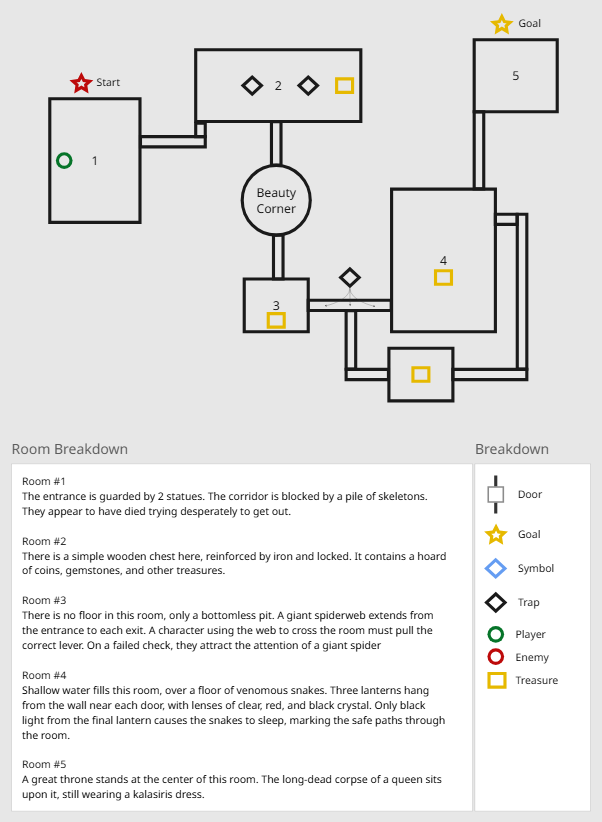
Paper Prototype: Mapped room layouts, jump paths, and trap logic to test flow and difficulty without engine cost.
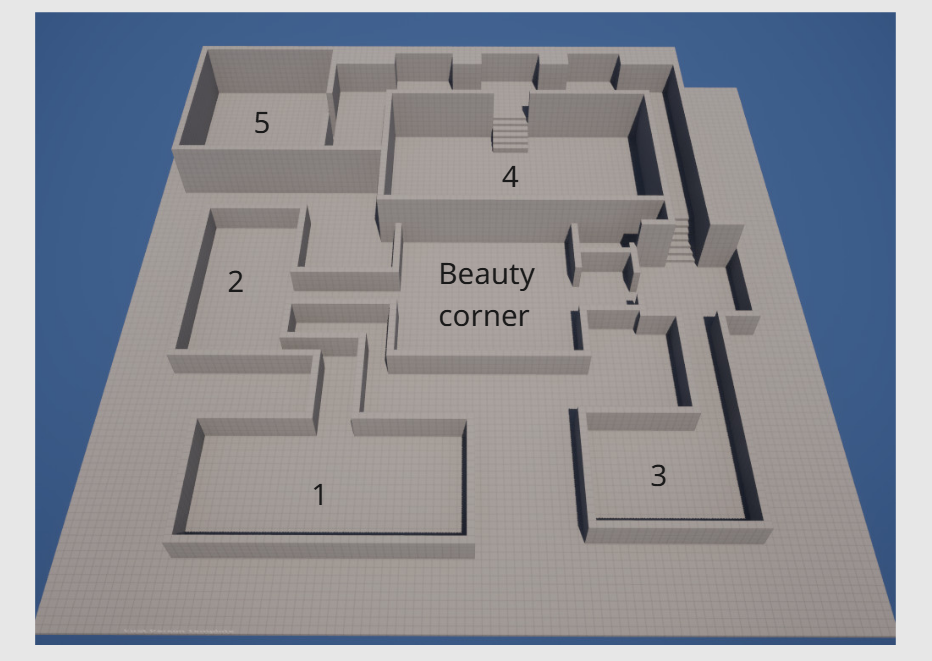
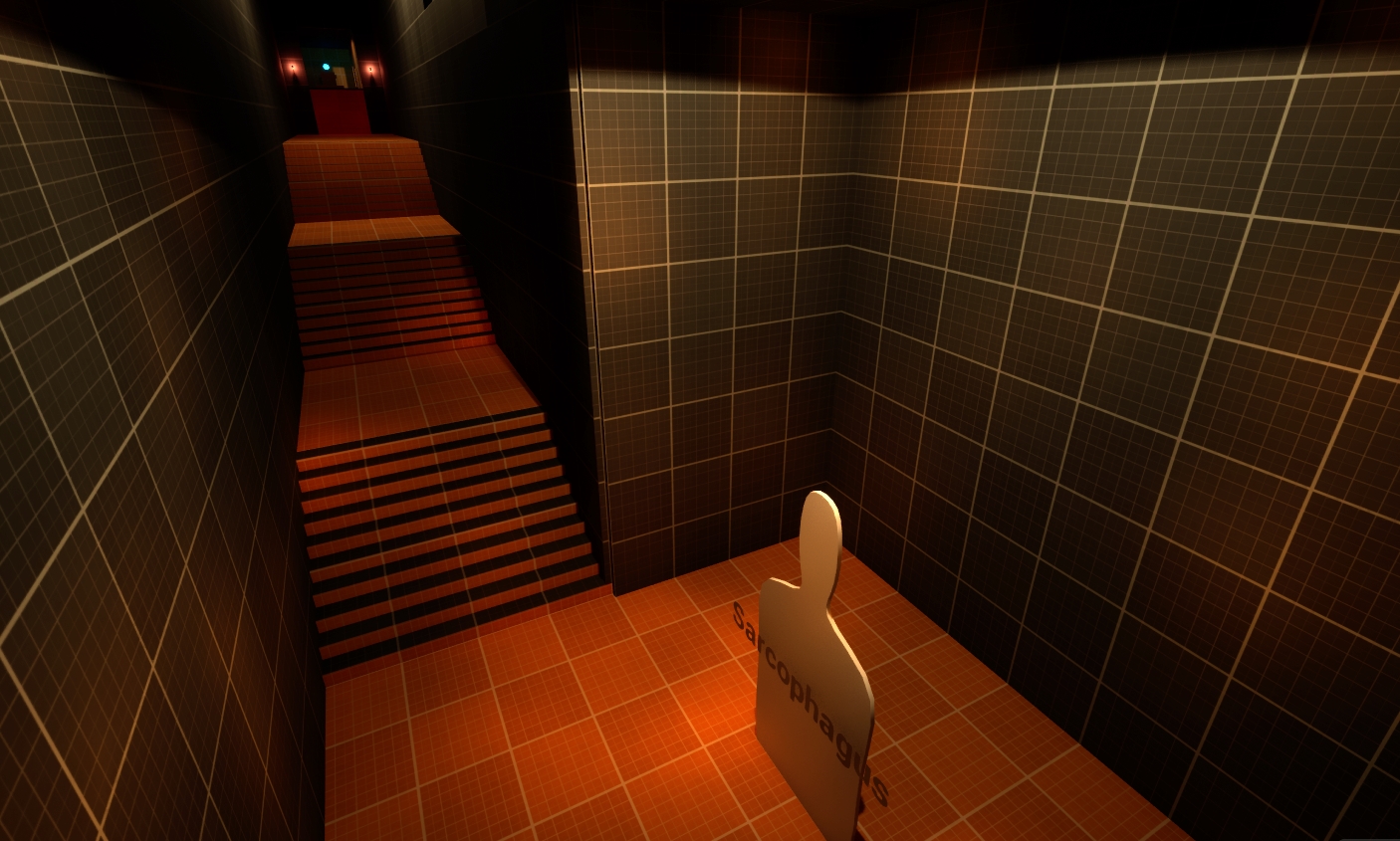
Blockout: Built a playable greybox to validate scale, jump distances, and player readability.
Iterations: Completed 8 iterations to refine pacing, trap placement, visibility, and difficulty progression.
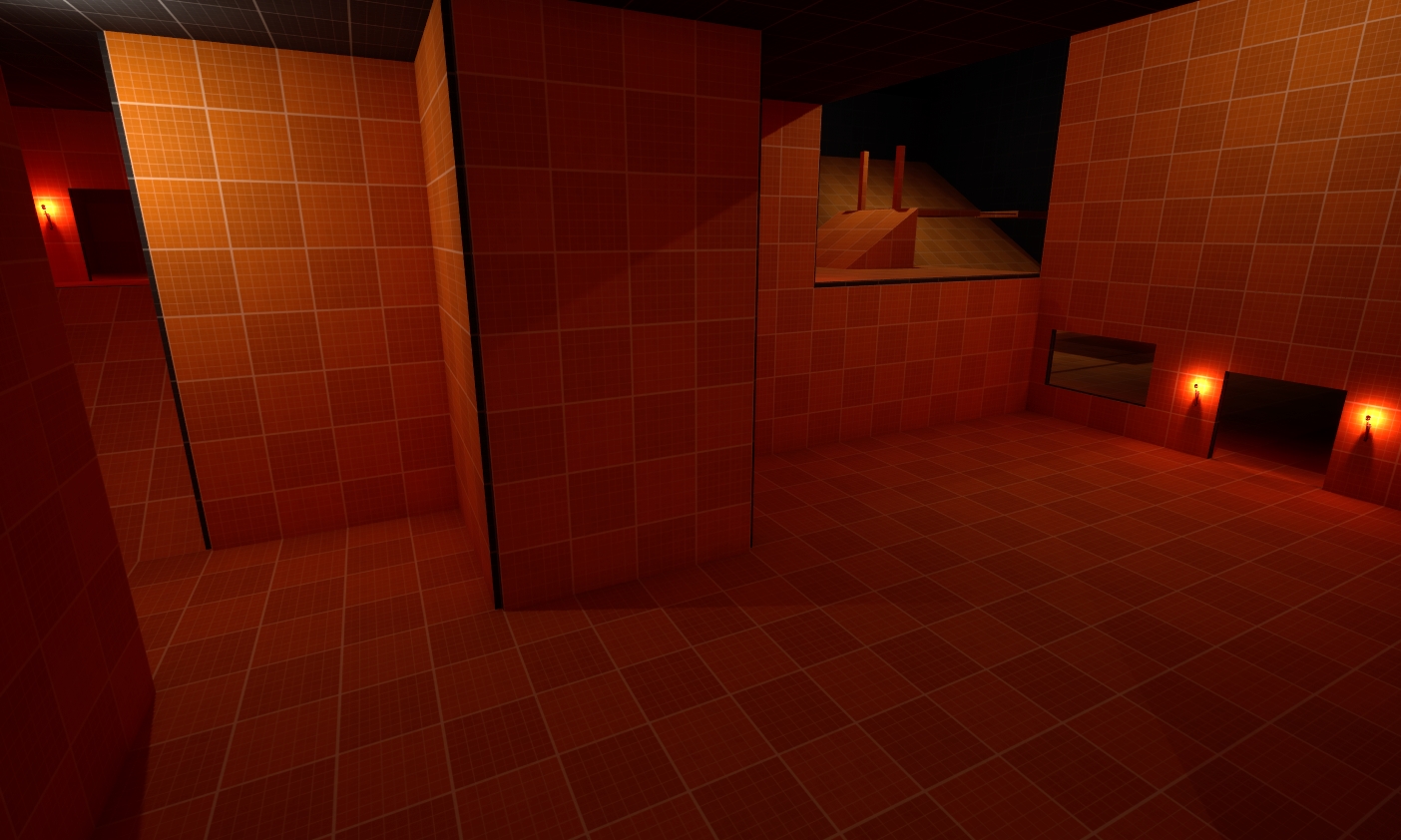
Finalized Blockout: Locked layout and proportions into a stable, fully playable build ready for polish or art pass.
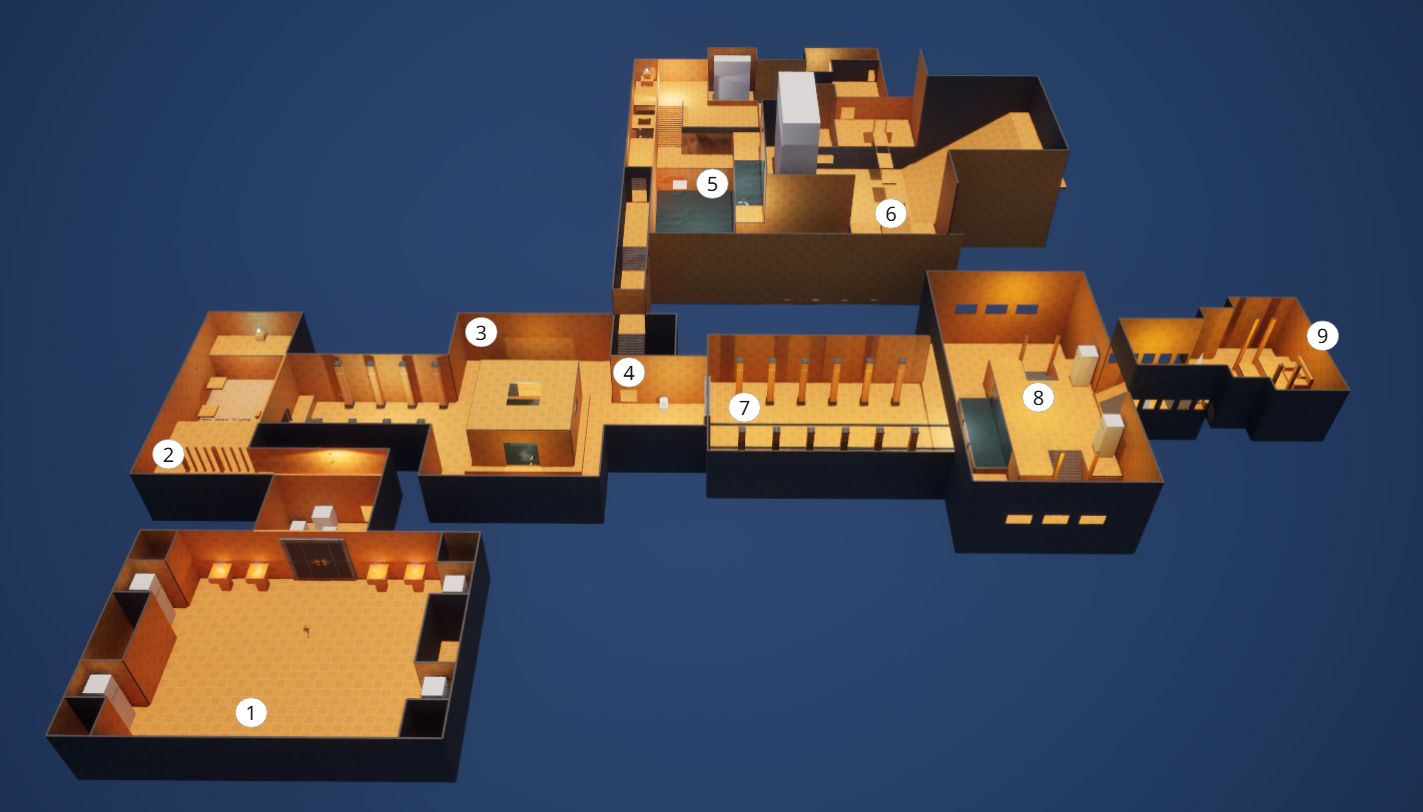
Worldbuilding
(↓ click on the tooltips to view the building designs)
1
2
3
4
5
6
7
8
9
Design Breakdown
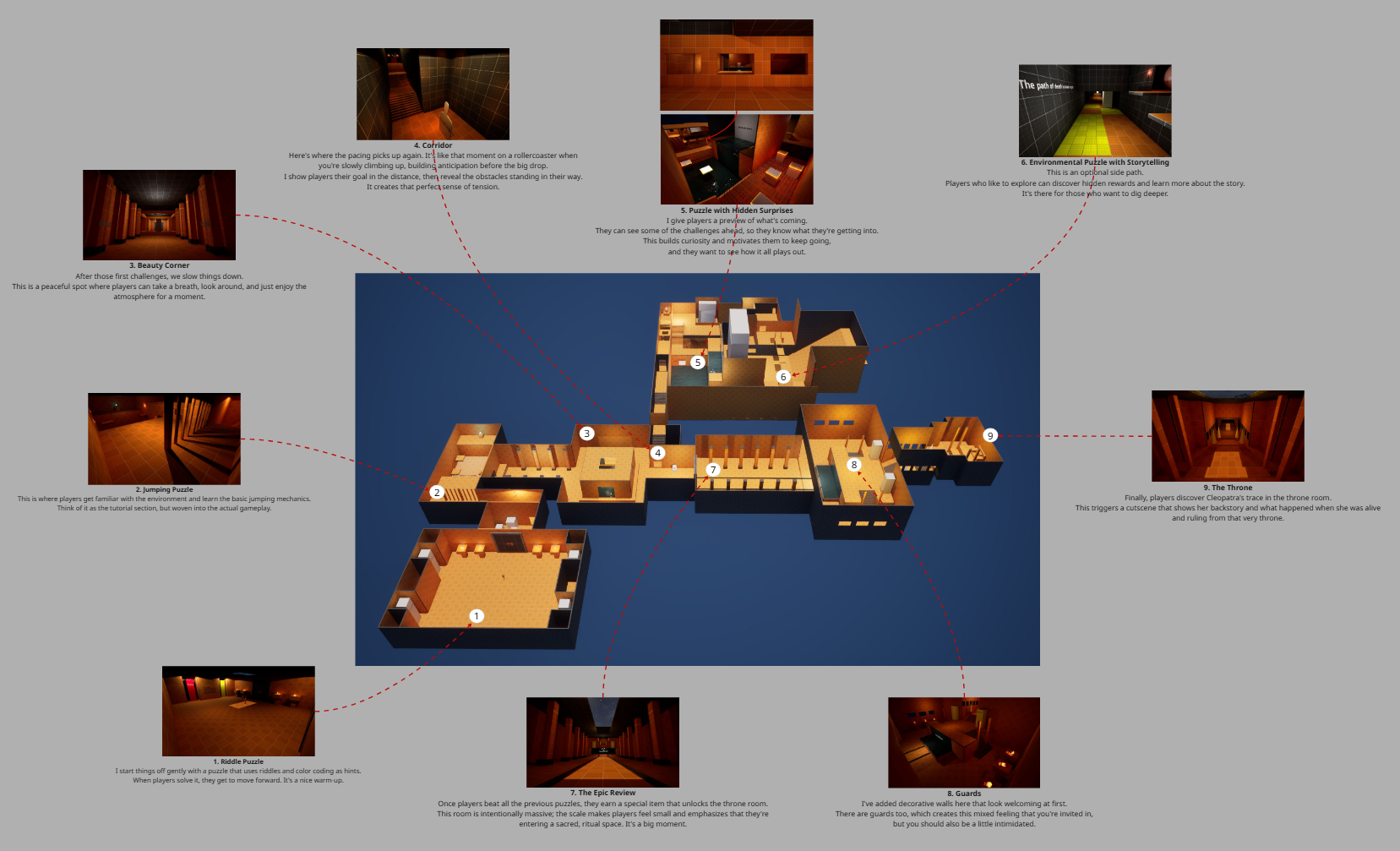
Design Breakdown and Level Beats
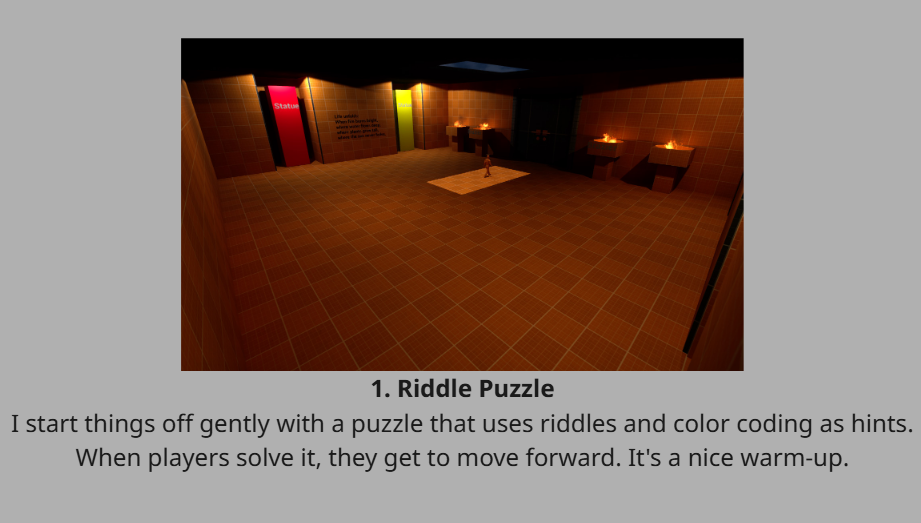
Opening Puzzle: Introduces the level’s logic at low risk, encouraging observation before movement.
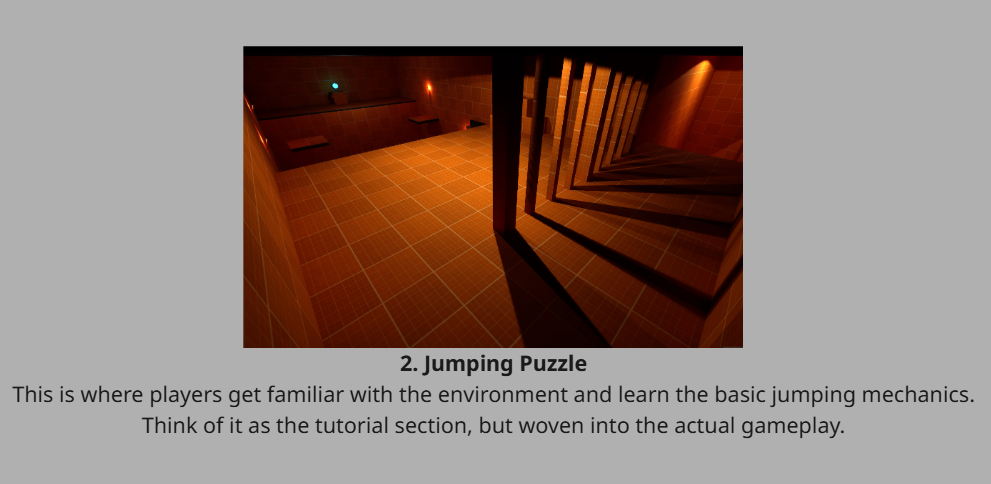
Easy Jump Challenge: Establishes core platforming rules and jump distances in a safe environment.
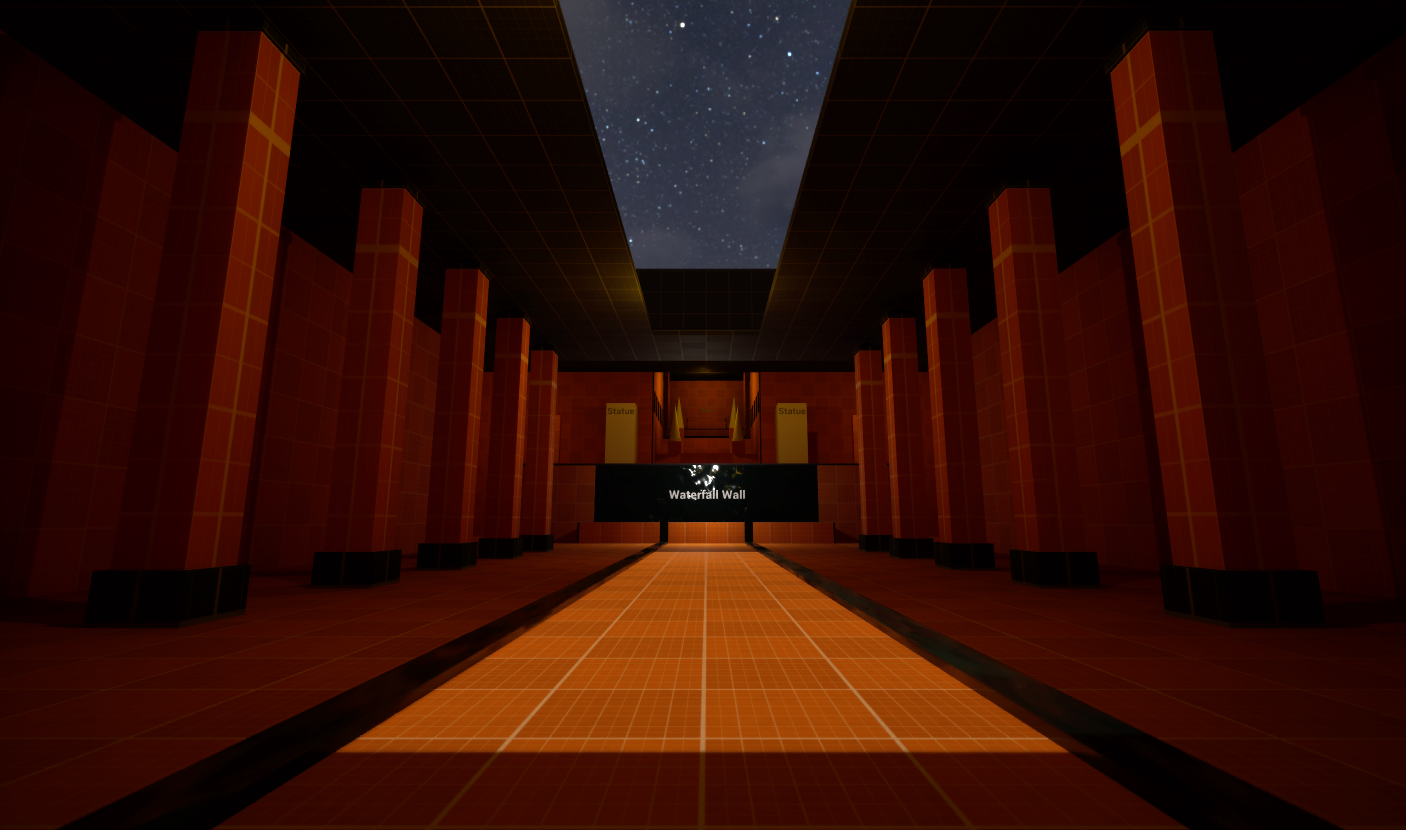
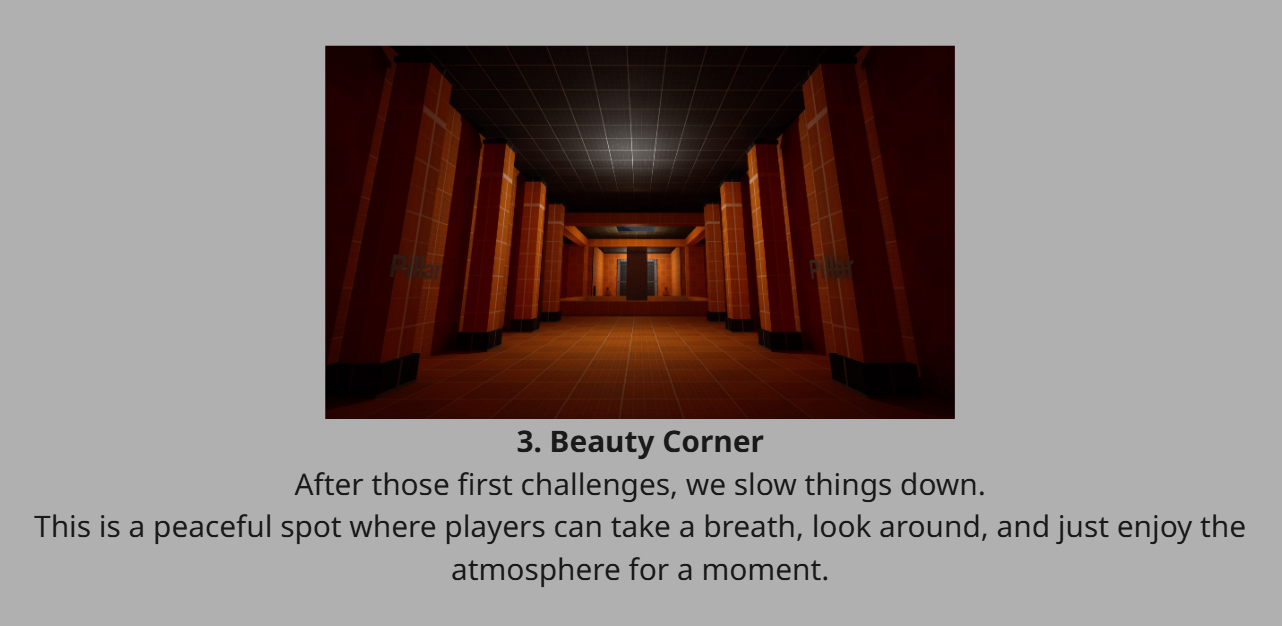
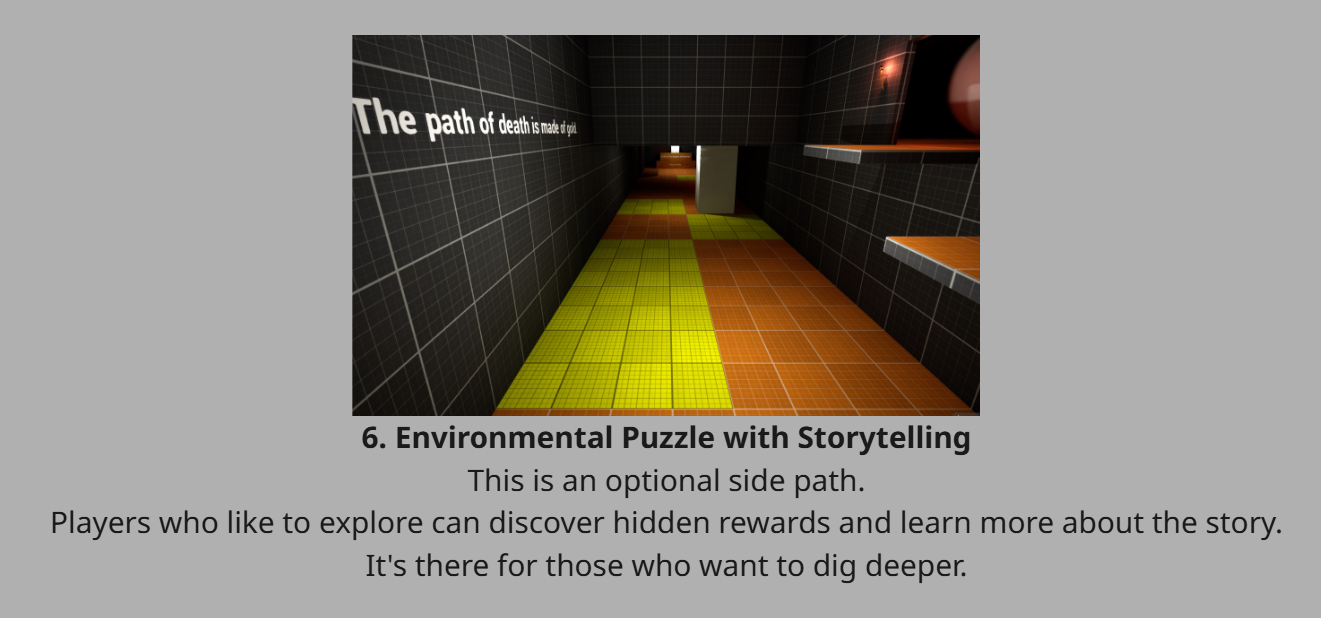
Beauty Corner: Slows pacing with a strong visual moment to ground the Egyptian setting and reset player tension.
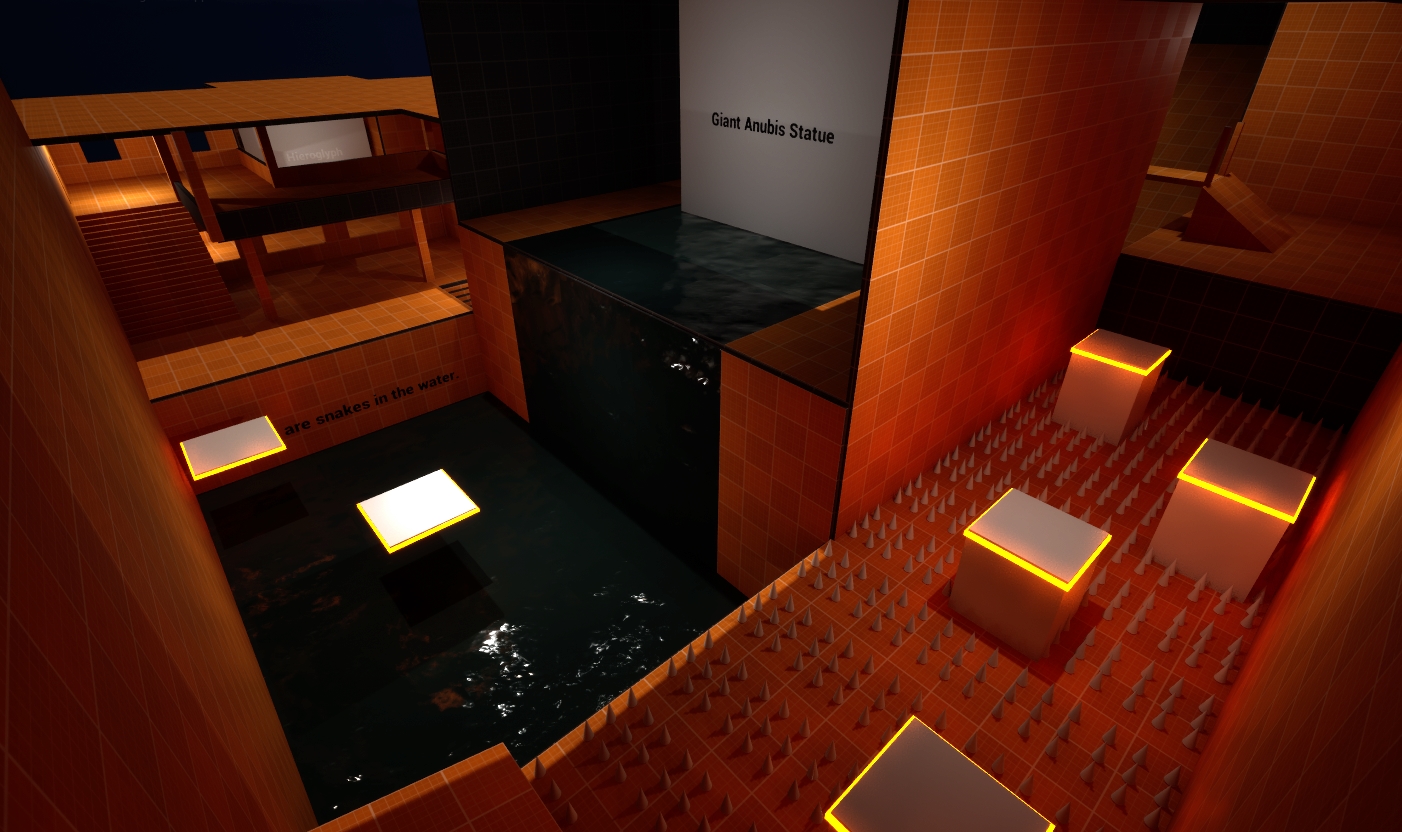
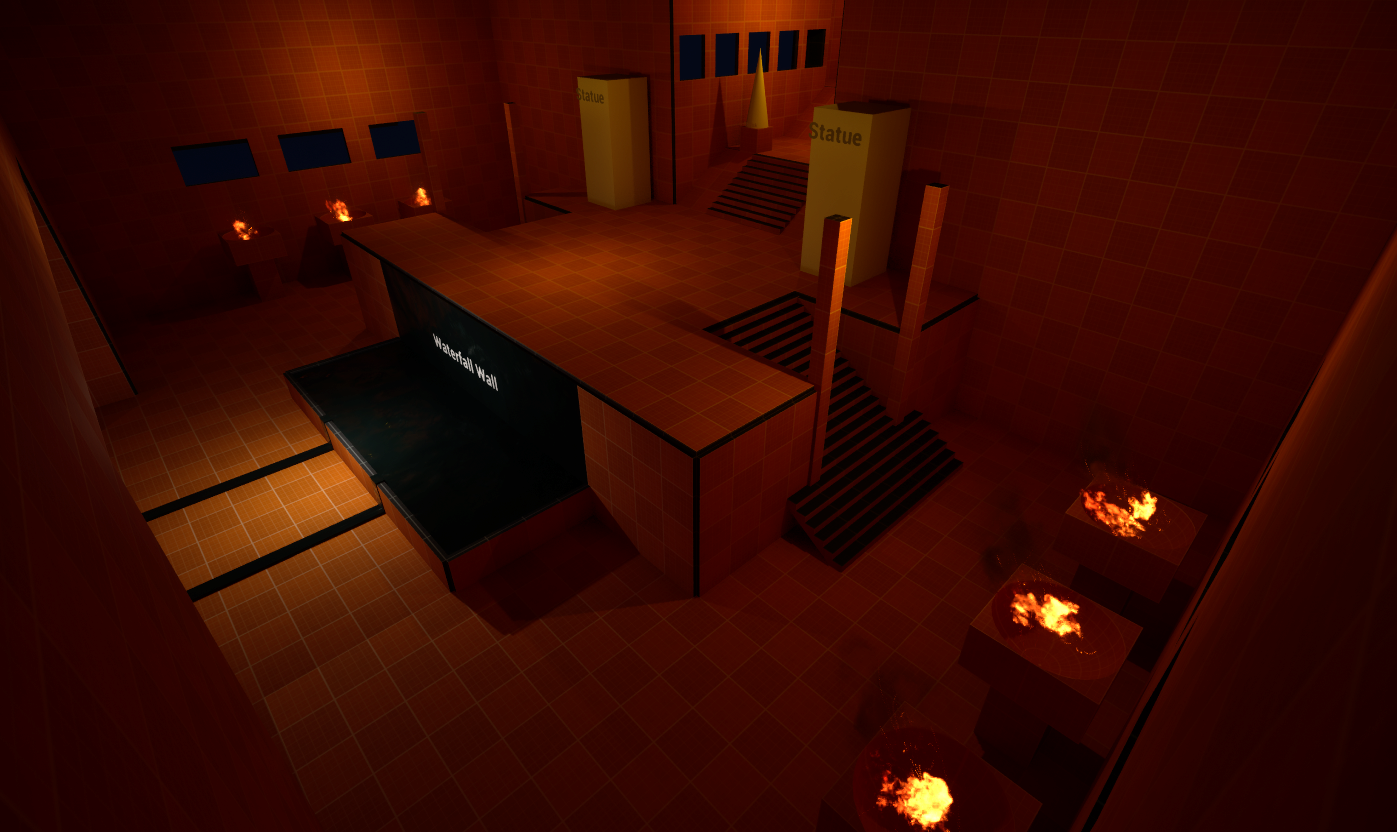
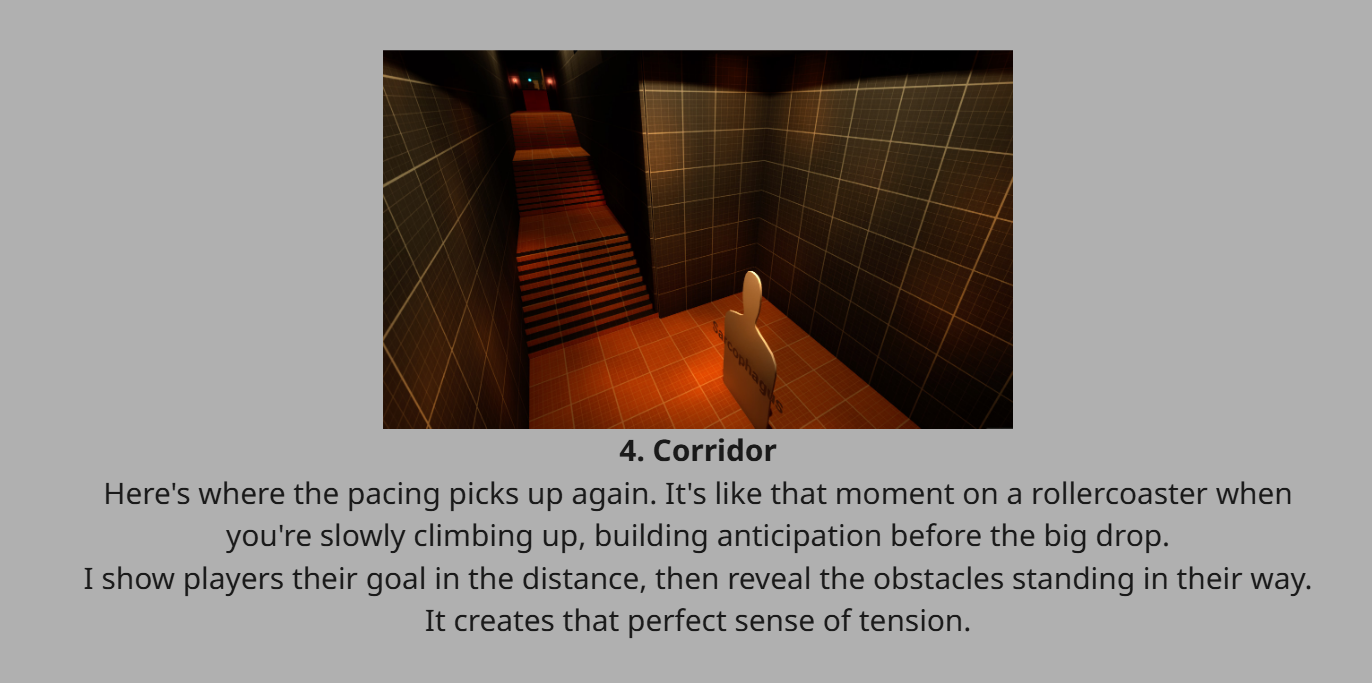
Traps and Light Scare: Introduces visible traps and a mild scare to raise tension without punishing failure.
Item Introduction: Presents an item that unlocks a new area, teaching its use through immediate feedback.
Split Path Area: Offers two routes with the same exit to create player choice without branching complexity.
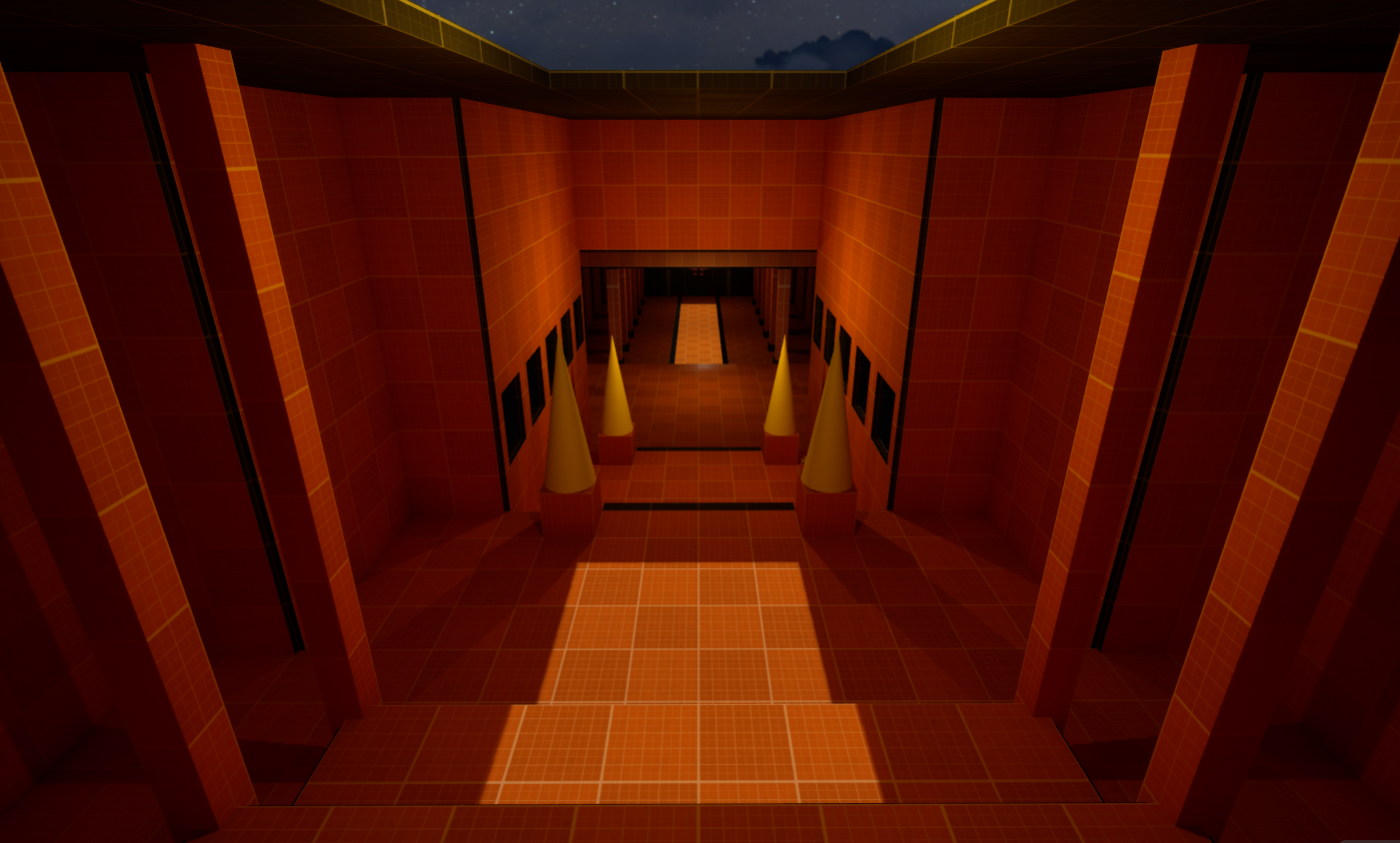
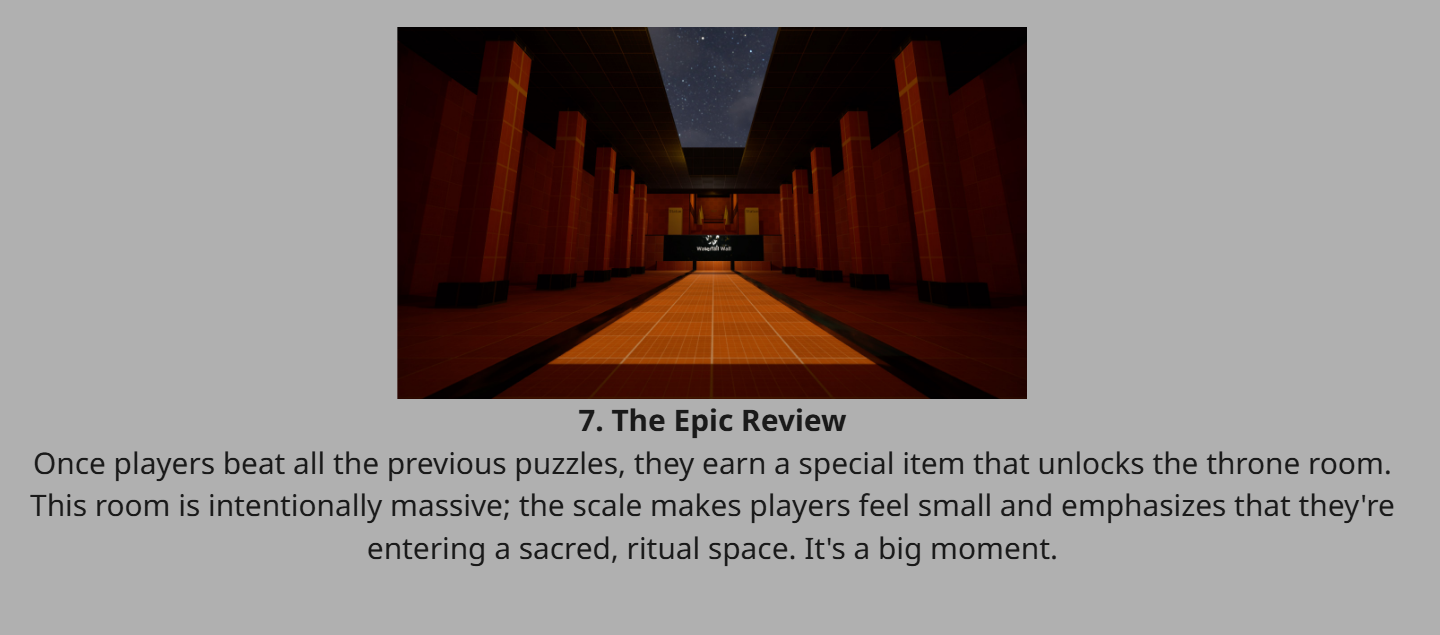
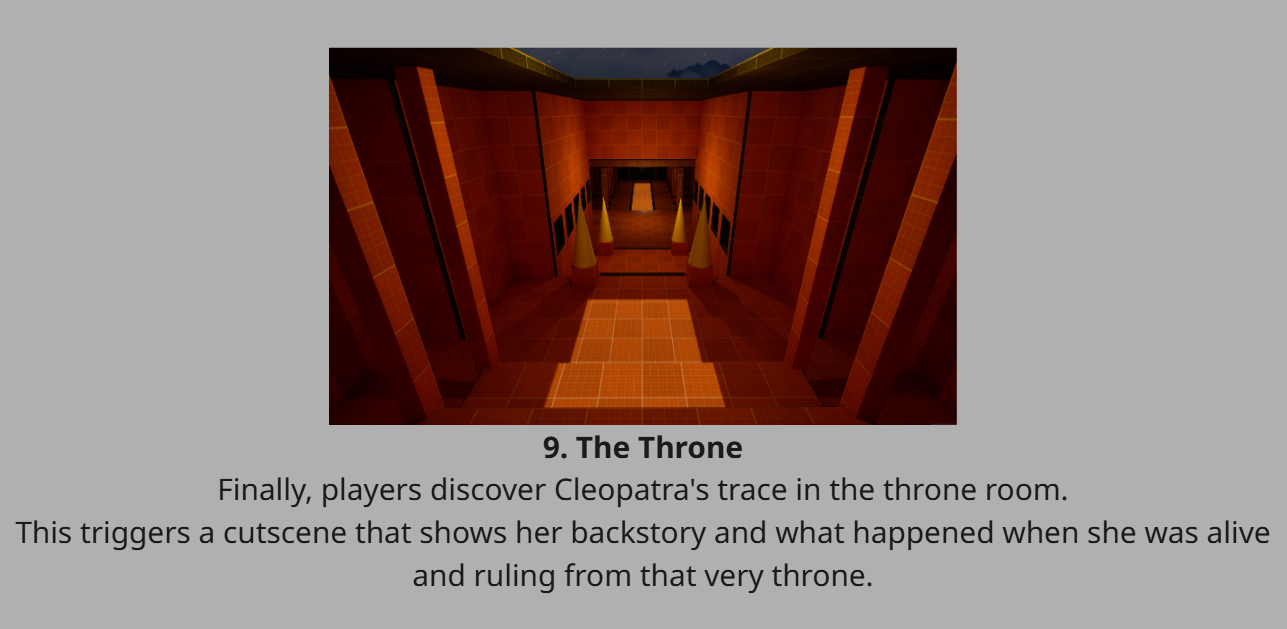
Grand Reveal: Concludes with the throne room, using scale and structure for an epic visual payoff and sense of progression.
Genre and Content Research
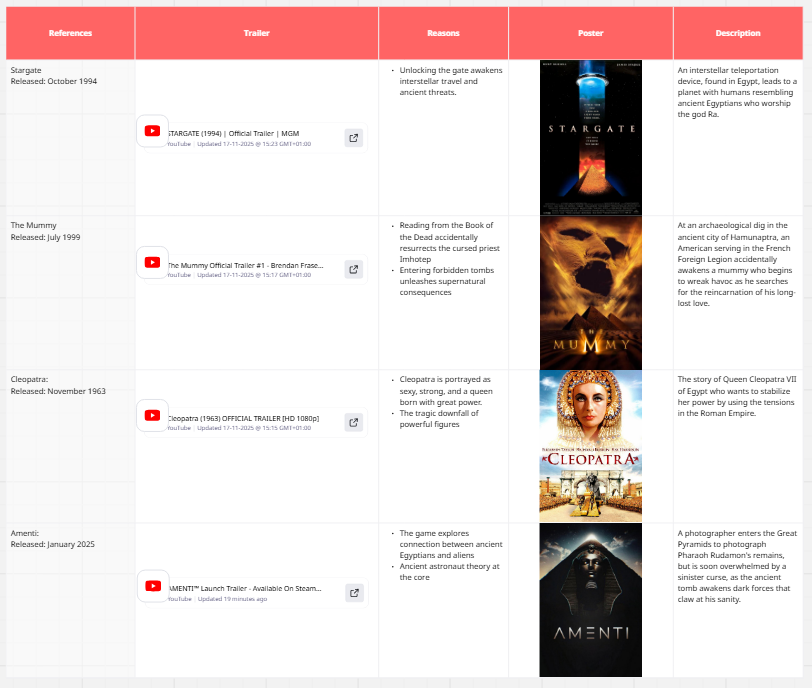
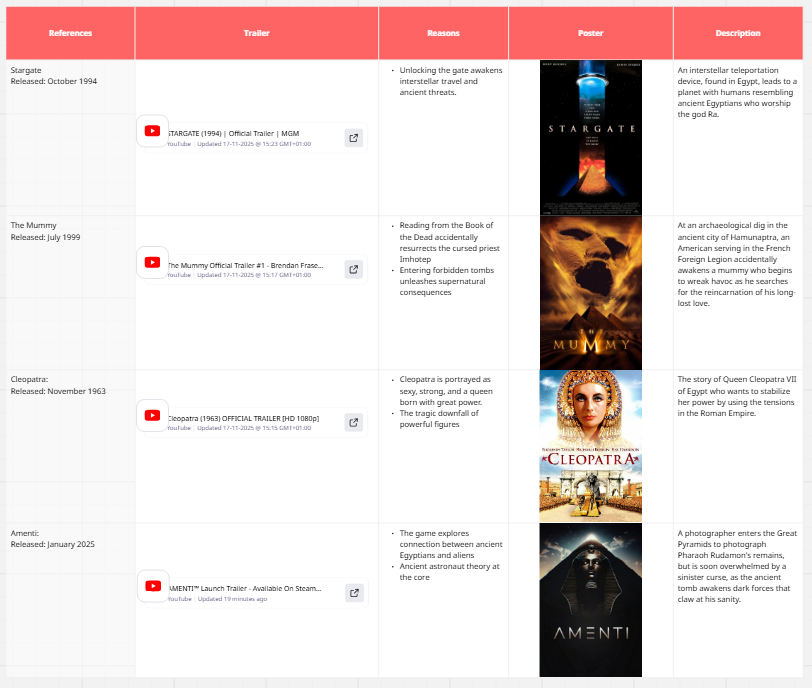
Performed high-level research to document to help determine the game’s popularity and help the marketing team do preliminary research with the target audience by critically consuming content from similar games as well as movies and shows that share narrative themes:
Created a list of movies, TV shows, and games, including the official synopses of the titles, and links to their trailers
Wrote focus notes on what elements to draw inspiration from to prove similar ideas have interest across several audiences
Key Level Design Lessons
Scale breaks levels faster than anything; get it right first
Always use grid snapping for consistency and control
Establish clear metrics for all structural elements
Keep player reference visible; design around character movement, not camera
Editor visuals don’t matter until playtested
Real-world scale feels wrong; use intentional compression
Rebuilding is part of the process, not failure
Playtests beat intuition and measure travel times between key points
Progress means feedback shifting from “broken” to “almost works.”